As I headed for work at 11 pm I noticed spires of aurora in the darkening northern sky. I grabbed my camera and started a series of time lapses.
Monday, 20 May 2013

Sunday, 12 May 2013
2003
I walked into the back parking lot of my apartment and caught sight of the orange ember shining steadily in the southern sky. It was the late summer and a historic astronomical event was under way. Every 26 months the red planet and our own blue one line up on one side of the Sun in a close encounter known as an opposition.
 But the great Mars opposition of 2003 was particularly special. Mars happened to lie at its closest point to the Sun in its elliptical orbit right at the time of opposition which brought it closer to Earth than it had been in 60,000 years. At that moment all of humanity was closer to this New World than we had been since the time of the first human migrations out of Africa.
There was a day those 60 millennia ago on which a few brave and forgotten names stood on the coast of an untravelled ocean peering restlessly at the unknown beyond. A distant shore called them to place their lives at the mercy of the sea. We may never know for sure, but I like to imagine that the blood orb of Mars at perihelic opposition challenged them to face the perils ahead and guided them during the blackest nights on the open waters.
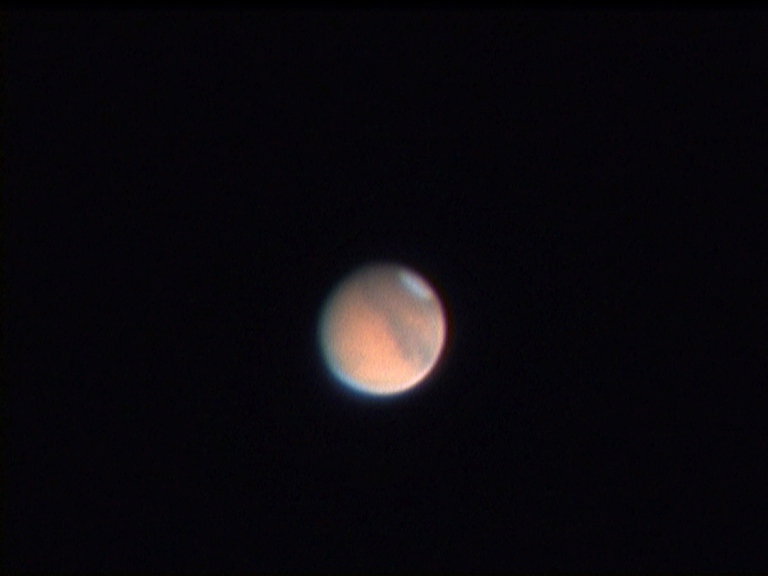
I took aim through the finder of my 6 inch reflector telescope and brought my eye to the eyepiece. An orange blur danced through the field of view. With restrained breath I nudged the focus knob. The haze solidified into a brilliant ocher marble rippling from the gaseous ocean of Earth's atmosphere that scattered its light in the last microseconds of its long journey across the interplanetary void.
Patience is certainly a virtue in astronomy where long hours at the eyepiece can reward the viewer with a few precious moments of steady air that snaps an amorphous apparition into crystal clarity. At the top of the ruby world was a white spot and below that was a dark streak, the barely resolvable images of a polar ice cap and a vast plain peppered with black volcanic glass. My stomach jumped as I switched perspectives. I no longer belonged to the Earth and I was no longer looking up.
I was dangling upside-down, my feet stuck to a blue spark 56 million kilometers above the cold dusty Martian ground, lost in the glare of the tiny noon day Sun above my feet. Comfortable as the mother world was I wished I could loosen her hold on me. I wanted to fall as fast as a light beam. At that speed I could be on the dusty Martian ground in only 4 minutes. Electromagnetism makes a mockery of even our swiftest spacecraft.
Like the undiscovered lands of past epochs Mars calls to me with an irresistible song across a perilous sea. I need only a ship to sail the heavenly breezes.
There was a day those 60 millennia ago on which a few brave and forgotten names stood on the coast of an untravelled ocean peering restlessly at the unknown beyond. A distant shore called them to place their lives at the mercy of the sea. We may never know for sure, but I like to imagine that the blood orb of Mars at perihelic opposition challenged them to face the perils ahead and guided them during the blackest nights on the open waters.
I took aim through the finder of my 6 inch reflector telescope and brought my eye to the eyepiece. An orange blur danced through the field of view. With restrained breath I nudged the focus knob. The haze solidified into a brilliant ocher marble rippling from the gaseous ocean of Earth's atmosphere that scattered its light in the last microseconds of its long journey across the interplanetary void.
Patience is certainly a virtue in astronomy where long hours at the eyepiece can reward the viewer with a few precious moments of steady air that snaps an amorphous apparition into crystal clarity. At the top of the ruby world was a white spot and below that was a dark streak, the barely resolvable images of a polar ice cap and a vast plain peppered with black volcanic glass. My stomach jumped as I switched perspectives. I no longer belonged to the Earth and I was no longer looking up.
I was dangling upside-down, my feet stuck to a blue spark 56 million kilometers above the cold dusty Martian ground, lost in the glare of the tiny noon day Sun above my feet. Comfortable as the mother world was I wished I could loosen her hold on me. I wanted to fall as fast as a light beam. At that speed I could be on the dusty Martian ground in only 4 minutes. Electromagnetism makes a mockery of even our swiftest spacecraft.
Like the undiscovered lands of past epochs Mars calls to me with an irresistible song across a perilous sea. I need only a ship to sail the heavenly breezes.
Friday, 3 May 2013
The Story of a Stone

Great forces compelled a plume molten rock from the mantle to rise, bursting through the crust and pouring onto the surface. Tumbling in a seething torrent of molten clinopyroxene were red hot crystals of peridot. As the river of lava flowed over the surface it lost heat to the atmosphere above it and to outer space beyond, cooling and freezing the forest green crystals into a matrix of a lighter shade.
There it sat for nearly half a billion years. The average human could re-live their entire life fifteen million times while the tendril of basalt waited under the blowing sand.
Some things are unlikely to happen on any given day. The chances that your planet will be hit by an extraterrestrial impactor kilometers in size are astronomically small today or at any time in your life. But if your life spanned 5 million centuries you would see that day arrive.
The moment the cosmic invader struck the ground its energy was transferred into the planet's crust.
The ground exploded and the rock was accelerated upward through the airless void of the comet's wake. In seconds it had reached a speed of Mach 15. In the span of each second it gained 5 thousand meters of altitude. Escape velocity. The speed at which what goes up must not come down.

The stone tumbled away from its homeworld until the brightly lit orb that had been its home for so long became a mere speck that faded into the black airless void, unprotected from the assault of chemisty-altering radiation from its star and from the explosive deaths of ones much more distant.
After a million years adrift And in another of those inevitable coincidences that are the hallmark of such passages of time an object drifted into the rock's billion kilometer orbit around the star at precisely the right time. It was a sphere of magnetized metal, encased in stone with a thin coating of liquid water and a wide diversity of complex carbon compounds adhering to its surface. The sphere was shrouded by a protective layer of gas and plasma. It was an alien planet, larger than the stone's homeworld.
The rock collided with the atmosphere. A basaltic diver in a hypersonic cannonball. The heat of its bow shock melted and ablated its sunbaked surface leaving a glowing wake of rock vapour along its path.
The force of the intense deceleration tore fragments from its surface as it plunged deeper into an atmosphere much denser than that of its home.The rock slowed dramatically to the relative crawling speed of a race-car. It was at this speed that it slammed into the barren surface of the rocky desert.
It remained there for only 140 thousand years while a promising form of life spread across the continents of this new world. A species with a thirst for knowledge and the skills to quench it would discover this nondescript green stone on the desert pavement of Southern Libya and solve the mystery of its origin.
This is a piece of that stone. Its name is Dar Al Gani 476 and it came from another world.

I told this stone's story because I plan to retrace its journey. After a million years apart I plan to bring this stone back to its homeworld and in the process to expand the frontiers of humanity, challenge my perceived limitations and take the whole world with me as I share the experiences of my long voyage.
Its homeworld is within our reach. It is The New World of our epoch.
With your support and a bit of luck I'll be going to Mars.

Thursday, 2 May 2013
Introduction
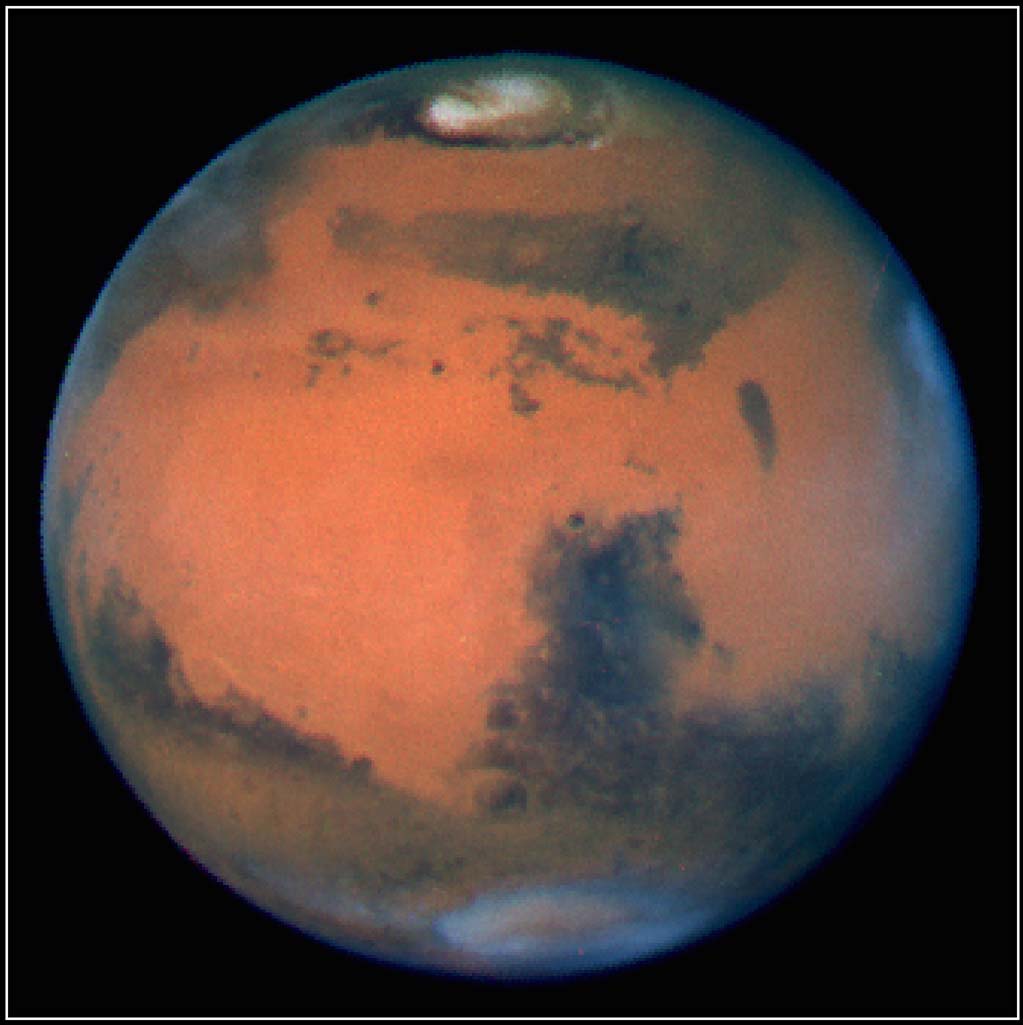 Dear citizens of the Blue World;
My name is Graham. I live in the Canadian rocky mountains and I plan to go to Mars. I have at least 10 years of preparation ahead of me. This site will tell my story.
Stay tuned...
Subscribe to:
Posts (Atom)